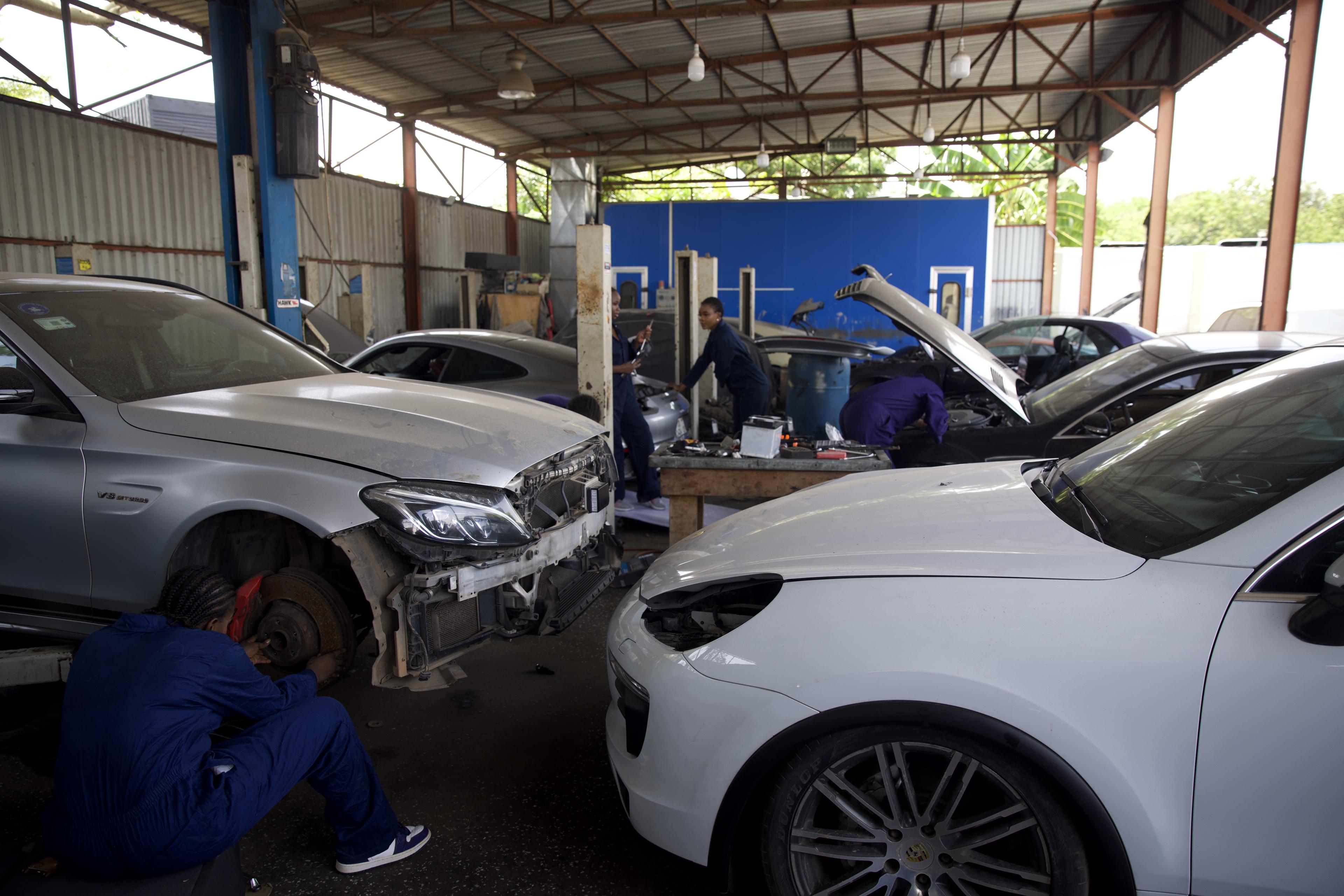
Modern cars require modern skills.
Vehicles now rely on advanced electronics, sensors, onboard computers, diagnostic codes, digital repair systems and increasingly electric and hybrid platforms.
Six areas of technology, taught hands-on.
Digital diagnostics
Using diagnostic scanners and interpreting vehicle fault codes.
AI-supported repair learning
A learning environment where trainees use AI-supported tools to understand symptoms, compare repair pathways and strengthen diagnostic reasoning.
EV and hybrid readiness
Foundational concepts for electric and hybrid systems: safety, batteries, charging and future service needs.
Electrical and sensor systems
Vehicle electronics, sensors, wiring systems and troubleshooting methods.
Digital service records
Documentation, service history, workflow tracking and customer communication.
Service operations technology
How modern garages use scheduling tools, inventory systems, customer records and service management platforms.
Why technology matters for women
Technology creates a new entry point into the industry.
Women do not need to be limited by old assumptions about physical mechanical work. The future of automotive service depends on problem-solving, digital tools, diagnostics, data interpretation, customer communication and operational discipline.
Integrated empowerment pathway
- Recruit
- Train
- Certify
- Employ
- Launch
- Lead
Program
Women in Automotive Skills & Certification
Flagship 16-month cohort training
Equipping underserved women and orphans with high-demand mechanical skills that lead directly to employment and entrepreneurship.
Technical masteryOpen: Women in Automotive Skills & CertificationProgram
Women's Microenterprise & Market Linkage Accelerator
Post-training business launch program
Ensuring graduates move from skills to sustainable income.
Income & entrepreneurshipOpen: Women's Microenterprise & Market Linkage AcceleratorProgram
Life Skills, Leadership & Workforce Readiness
Foundational and wraparound support program
Building confidence, numeracy, safety awareness and leadership capacity that supports long-term economic success.
Leadership & sustainabilityOpen: Life Skills, Leadership & Workforce Readiness
Ready to train with us?
No formal literacy requirement. Applications are open to women aged 18 to 40, with orphans prioritised.